


How to Financially Prepare for Surrogacy: A Step-by-Step Roadmap
When the Number Feels Too Big
You’ve dreamed about growing your family. You’ve talked to doctors and read about agencies. Then you see the estimate, and one worry takes over:
“We want to pursue surrogacy, but what if our savings don’t cover everything?”
You are not alone in feeling this way. A six-figure number can make surrogacy feel out of reach. It’s normal to worry about your emergency savings or a surprise bill halfway through.
Here’s the good news. Surrogacy is not one giant bill. It’s a series of smaller costs spread out over many months.
When you break it into stages, you can see what’s coming, when it’s due, and what to set aside for surprises. That turns a scary total into a plan you can manage.
Let’s walk through it together.
How Do Intended Parents Financially Prepare for Surrogacy?
Intended parents financially prepare for surrogacy by mapping costs to each stage of the journey and building a realistic budget with known, variable, and backup costs. They keep household emergency savings separate, explore benefits, grants, or financing, and often use an independent escrow account to manage payments to the gestational carrier.

Before we walk through each stage, a quick word about the big number. Published estimates for a U.S. gestational surrogacy journey vary widely, and they don’t all include the same costs. As one agency guide points out, there is no single authoritative national average, because each estimate includes different services and assumptions. Your total can change a lot based on your embryos, donors, insurance, and where you live.
So instead of one big number, this roadmap shows what you may pay for and when. Your agency, clinic, and attorney can help you fill in the real amounts.
Stage 1: Planning and Preparation
This is your research stage. Costs are usually smaller here, but they help you avoid bigger surprises later.
What you may pay for:
- Consultations with clinics and agencies (many agency consults are free)
- Fertility tests, like bloodwork or a semen analysis
- A first meeting with a surrogacy attorney
- An insurance and benefits review of your own plan
- Financial or tax planning with a professional
- Travel if your clinic or agency is out of state
Tip: Ask every provider, “What does this quote include?” Save every estimate in one folder.
Stage 2: Creating Embryos
If you don’t have embryos yet, this is often one of the biggest and least predictable costs. Plan in ranges, not exact numbers.
What you may pay for:
- IVF cycle fees (egg retrieval, lab work, fertilization)
- Fertility medications, often billed separately
- Monitoring visits like ultrasounds and bloodwork
- Genetic testing of embryos, if you choose it
- Egg or sperm donor costs, if needed
- Embryo storage, usually billed every year
Good to know: One IVF cycle doesn’t always give you enough embryos. Ask your clinic how often a second cycle is needed and whether it offers multi-cycle packages.
Stage 3: Finding and Matching With a Gestational Carrier
Matching is an exciting milestone. It’s also when agency and screening costs usually start.
What you may pay for:
- Agency fees, if you use an agency (often a deposit, then a payment at match)
- Medical screening for your carrier
- Psychological evaluations
- Background checks
- Travel for your carrier to attend screening
- Other matching costs, like home visits
Tip: Ask which costs would repeat if a match doesn’t work out.
Stage 4: Legal and Escrow Preparation
Once you’re matched, it’s time to put everything in writing. This stage also sets when most future payments will happen.
What you may pay for:
- Your attorney, who drafts and negotiates the agreement
- Your carrier’s own attorney (intended parents usually cover this)
- Contract negotiation, which can take a few rounds
- Parentage legal work, which depends on your state
- Court or filing fees, when needed
- Escrow setup and management fees
- Your first escrow deposit, often required before the embryo transfer
What is a surrogacy escrow account?
A surrogacy escrow account is a secure, neutral place to hold the money for your carrier’s compensation, allowances, and reimbursements.
Here’s how it works:
- You fund the account.
- The escrow provider follows your legal agreement to make each payment on time.
- Every transaction is recorded, so everyone can see what was paid.
One important point: escrow does not lower the cost of surrogacy. It helps you manage the money clearly and safely.
Why an independent third party helps
Money talks can feel awkward. Most people would rather chat about ultrasounds than about a mileage reimbursement.
With an independent escrow provider, your carrier sends requests to the escrow team, not to you. Payments go out on schedule, and you both see the same records. That keeps your relationship focused on the journey, not the bills.
At SeedTrust, for example, each intended parent and carrier gets a personal account on a secure online portal to view payment schedules, agreements, and records anytime.
Tip: Ask how much you need to deposit up front and whether you’ll need to add more later.
Stage 5: Pregnancy
This is the moment you’ve been waiting for. It’s also when regular monthly payments usually begin.
Every agreement is different. The list below shows common examples. Your signed agreement decides what applies to you.
What you may pay for:
- Carrier compensation, often paid in monthly installments
- Milestone payments, like at embryo transfer or first heartbeat
- Monthly allowances for everyday pregnancy costs
- Insurance premiums, if your carrier needs a separate policy
- Deductibles and copays
- Medical reimbursements
- Maternity clothing allowance
- Travel to appointments
- Childcare or housekeeping help, if in the agreement
- Lost wages, if in the agreement
Watch out for insurance. Some health plans don’t cover surrogate pregnancies. Have a specialist review your carrier’s insurance before the transfer to avoid a big surprise later.
Tip: Ask your escrow provider how they’ll let you know before the account runs low.
Stage 6: Delivery and Post-Birth
You’re about to meet your baby! A few final costs remain. Planning now lets you enjoy the moment.
What you may pay for:
- Hospital bills not covered by insurance
- Your travel and lodging near the hospital
- Parentage paperwork, depending on your state
- Final reimbursements for your carrier
- Postpartum payments, if in the agreement
- Your baby’s costs, including adding your baby to your health plan
Closing the escrow account
Once every payment in your agreement is complete, your escrow account can be closed. Ask your escrow provider how long that takes and what happens to any leftover money.

Don’t Forget the Unexpected
For many parents, the biggest worry isn’t the known costs. It’s “What if something changes?”
Journeys do change sometimes. That doesn’t mean something will go wrong. It just means a good plan leaves room for surprises.
Extra costs could come from:
- Another embryo transfer
- More IVF treatment
- Longer travel or hotel stays
- Insurance changes
- Bed rest or lost wages, if in the contract
- Pregnancy complications
- Extra legal work
- Timeline delays
- Rematching, if needed
Keep two separate safety nets
- A surrogacy backup fund: money inside your surrogacy plan for costs that might happen, like a second transfer.
- Your personal emergency savings: money for everyday life, like a job loss or car repair. Keep this separate from your surrogacy budget.
How much should your backup fund be? There’s no one right answer. Ask your agency, attorney, clinic, financial professional, and escrow provider what makes sense for your journey.
How to Budget for Surrogacy: Build a Simple Financial Dashboard
A budget feels less scary when you can see it all in one place. Try creating a Surrogacy Financial Dashboard: one spreadsheet or app for every expense.
Easy tools to use: Google Sheets, Microsoft Excel, YNAB, or any app you already like. Pick the one you’ll actually open.
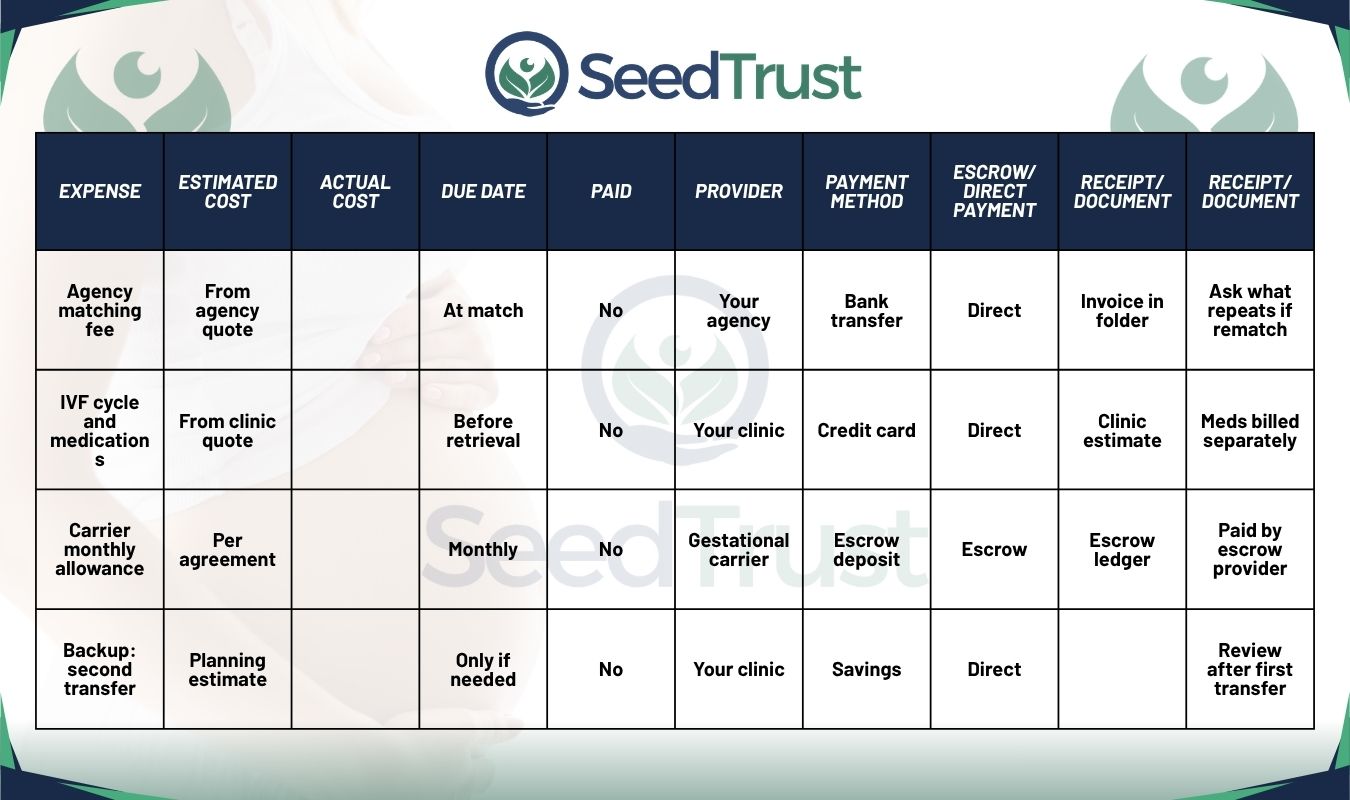
These rows are just examples. Swap in your own quotes.
Important: your dashboard is for your own planning. The official payment records stay with your escrow provider.
Sort every cost into four groups
- Known costs: Quoted or contracted amounts, like a signed agency fee.
- Variable costs: Expected costs that may change, like travel or medications.
- Backup costs: Money set aside for things that might happen, like another transfer.
- Personal emergency savings: Household money that stays separate from your journey.
This quick sort shows you what’s firm and what’s still uncertain.
How to Afford Surrogacy: Ways Families Fund Their Journey
Most families combine a few sources to pay for surrogacy. What works for one family may not work for another, so think of these as options to explore.
Savings
Savings are often the starting point. Since costs come in stages, you can save for each milestone instead of one huge total. Keep your emergency savings untouched.
Employer fertility or family-building benefits
Some employers help pay for IVF, surrogacy, or both. Ask HR what’s covered and whether there’s a limit.
Insurance
Your health plan may cover some fertility care for you. It’s much less common to cover your carrier’s pregnancy, so have both plans reviewed.
Grants
Some nonprofits offer family-building grants. They’re competitive and rarely cover everything, but every bit helps.
Financing or loans
Loans can help you start sooner, but they add cost. Before you borrow, check:
- The interest rate
- Any fees
- The monthly payment and length of the loan
Only borrow what you can comfortably repay while caring for a new baby. Avoid draining retirement savings or taking on debt that strains your home.
Family help
Some relatives offer a gift or loan. It helps to put expectations in writing.
HSA and FSA funds
These accounts can pay for eligible medical costs, usually care for you, your spouse, or a dependent. Your carrier’s medical care may not qualify. Check with your plan and a tax professional first.
A quick note on taxes
Surrogacy costs are not automatically tax deductible. In a 2025 ruling explained by The Tax Adviser, the IRS allowed some IVF costs for the parents’ own treatment, but not the gestational carrier’s costs.
Every situation is different, so talk to a qualified tax professional and keep records of every expense.
Questions to Ask Before You Start Spending
The best surprises are the ones you ask about early. Bring these questions to your agency, clinic, attorney, and escrow provider.
- What is included in this quote?
- Which expenses are estimates versus fixed fees?
- When will each payment be due?
- What happens financially if the first embryo transfer is unsuccessful?
- Are there potential rematching costs?
- What insurance expenses should we anticipate?
- Which expenses must be funded in escrow?
- How much must remain in the escrow account?
- When would we need to replenish the account?
- What happens to unused funds at the end of the journey?
- Which expenses could change significantly?
- What should we reserve outside our surrogacy budget for household emergencies?
Tip: Write the answers in the Notes column of your dashboard so everything stays in one place.
Where Does Escrow Fit Into Your Surrogacy Financial Plan?
Think of it this way:
- Your budget tells you how much you may need and when.
- Your escrow account handles how that money is held, tracked, and paid out.
Why use an independent escrow provider?
- Neutral: They follow your agreement, not either side.
- Transparent: You and your carrier see the same records.
- Organized: Every payment is documented.
- Hands-off for you: Payments go out on schedule, so you don’t manage transfers yourself.
- Fair reimbursements: Your carrier’s requests are checked against the agreement.
See everything with SeedTrust
SeedTrust’s secure online portal gives you 24/7 access to your ledger, documents, and transaction history, plus upcoming payments and your balance. One shared place to see everything can make the journey feel calmer.
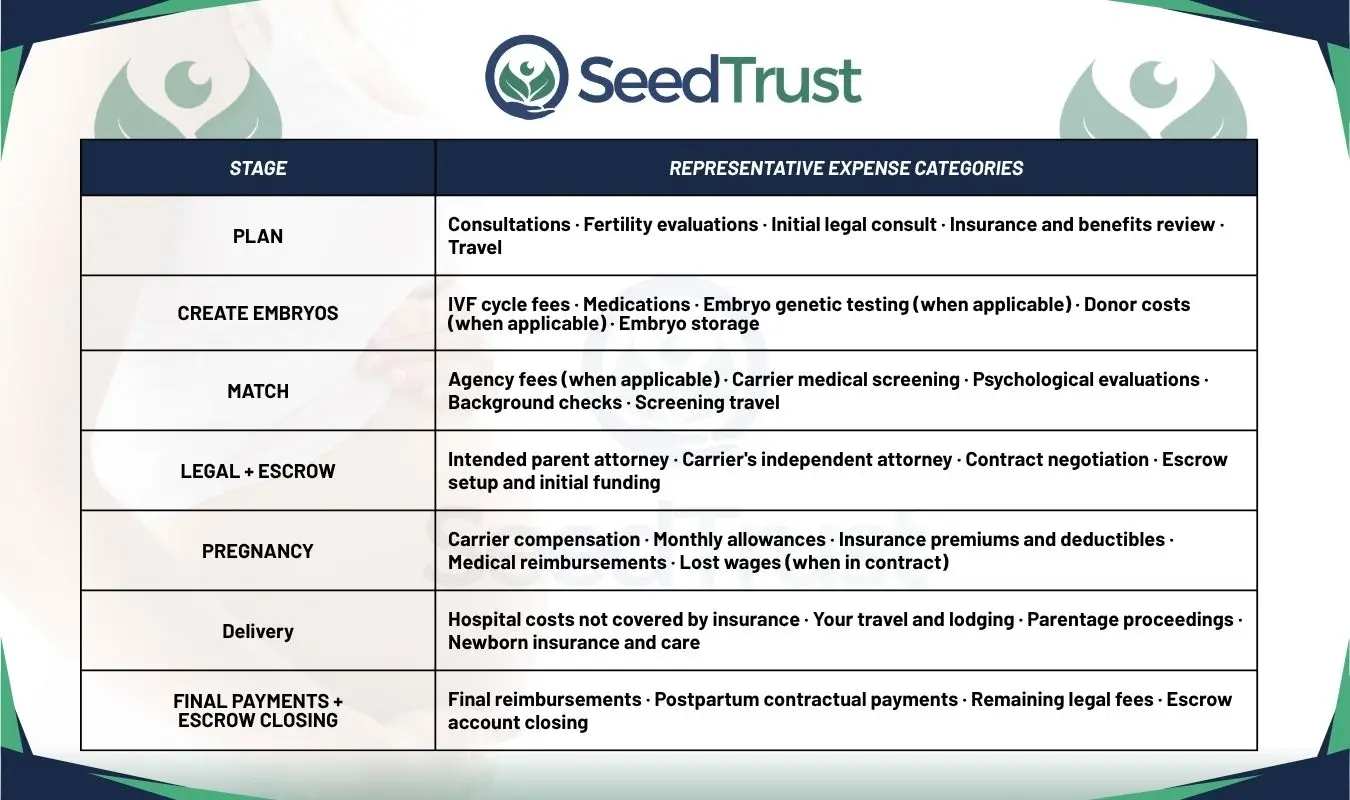
Your Surrogacy Financial Roadmap at a Glance

Frequently Asked Questions About Surrogacy Costs
How much should I save before starting surrogacy?
There’s no one number for everyone. It depends on your embryos, insurance, state, agency, and agreement. Start by collecting written quotes, matching them to each stage, and adding a backup fund. Keep your emergency savings separate.
Do I need all the money for surrogacy upfront?
Usually not. Costs come in stages over many months. Some payments are due early, like agency deposits and your first escrow deposit. Ask each provider for a payment schedule.
What unexpected surrogacy expenses should I prepare for?
Common ones include extra embryo transfers, more IVF, longer travel, insurance changes, pregnancy complications, extra legal work, delays, and rematching. Not every journey has these. Ask your team what backup amount makes sense for you.
Can you finance a surrogacy journey?
Yes, some families do, often alongside savings, benefits, or grants. Compare interest rates, fees, and repayment terms, and make sure payments will be manageable once your baby arrives.
What is a surrogacy escrow account?
It’s a secure account that holds the money for your carrier’s compensation, allowances, and reimbursements. An independent third party pays it out according to your legal agreement. It doesn’t lower costs, but it keeps payments organized and documented.
Why use an independent escrow provider for surrogacy?
An independent provider is neutral and follows your agreement. It offers clear records, scheduled payments, and organized reimbursements. It also means fewer awkward money conversations between you and your carrier. It doesn’t remove every financial risk.
A Note on Surrogacy Outside the U.S.
Some parents look at surrogacy in other countries. Laws and parentage rules vary a lot, and some countries restrict surrogacy. A lower price doesn’t always mean a simpler journey. If you’re considering this path, work with qualified legal counsel in every country involved.
You Don’t Have to Do This Alone
Planning the financial side of your journey can feel complicated. Managing it shouldn’t have to.
At SeedTrust, we help intended parents manage escrow funds with transparency, secure account management, and clear records. Our experienced team works with you, your carrier, your attorney, and your agency, so everyone knows where things stand.
Curious how escrow could fit into your plan? Learn more about SeedTrust for intended parents or reach out to our team with any questions. We’re happy to walk you through it, one step at a time.
Disclaimer
This article is for educational purposes only and is not individualized legal, tax, insurance, or financial advice. Surrogacy costs, laws, insurance coverage, and tax treatment vary by state and by individual circumstances. Please consult qualified professionals about your specific journey.